
Executive Summary
The fourth quarter represents a unique convergence of urgency and opportunity for B2B organizations. As fiscal years draw to a close, business decision-makers face concurrent pressures: budget allocation deadlines, revenue targets to meet, and strategic initiatives to finalize before calendar rotation. This white paper examines how forward-thinking organizations can leverage these dynamics to accelerate pipeline development, secure high-value meetings, and establish momentum for the following year.
Drawing on market insights and practical execution frameworks, we explore how businesses can navigate Q4 challenges—heightened competition, limited availability, compressed decision cycles—while capitalizing on genuine buyer receptivity. Organizations that combine targeted prospecting with multichannel engagement strategies achieve superior results compared to volume-focused competitors.
Key findings indicate that quality-driven outreach with strong execution timing yields significantly higher conversion rates than generic, high-volume campaigns. The global B2B lead generation market’s projected $11.23 billion valuation in 2025 reflects the substantial stakes and investment organizations place on executing Q4 effectively.

The Q4 Phenomenon: Understanding Market Dynamics
Quarter four operates within a fundamentally distinct market environment compared to other periods. This distinction creates both obstacles and advantages for organizations capable of adapting their engagement strategies accordingly.
Why Q4 Demands Different Approach
The year-end period compresses what would normally span months into weeks. Companies face simultaneous pressures across multiple dimensions: budgets require deployment or rollback, annual performance metrics drive urgency, and organizational calendars become increasingly constrained. This temporal compression fundamentally alters prospect behavior and availability.
Unlike mid-year cycles where deliberation occurs naturally, Q4 participants operate under external deadlines. Solutions addressing immediate business gaps suddenly become attractive propositions, whereas solutions requiring lengthy evaluation typically fade from consideration. This timeline compression can be advantageous for vendors offering clarity and rapid implementation.
The Competitive Intensity Factor
Every organization recognizes Q4 importance, which paradoxically makes it both valuable and crowded. Prospect inboxes overflow with competing offers. LinkedIn becomes saturated with year-end campaigns. Traditional channels experience unprecedented message volume, creating signal-to-noise challenges for all participants.
Organizations relying on generic outreach encounter resistance from diminished attention and message fatigue. However, those deploying refined, personalized engagement strategies find that competitive saturation actually creates opportunity. Superior execution becomes more noticeable precisely because most competitors default to volume-driven approaches.
Availability Constraints and Decision-Maker Access
Senior decision-makers operate under heightened time pressure in Q4. Year-end reviews, performance evaluations, strategic planning sessions, and holiday schedules all compete for limited calendar space. The executives most capable of authorizing significant spending often prove most difficult to reach during this window.
This accessibility challenge requires strategic adaptation. Organizations succeeding during Q4 typically combine persistence with respect for decision-maker schedules, employ multiple contact pathways, and focus messaging specifically on solving immediate problems rather than presenting comprehensive capabilities.
Navigating Q4 Challenges: A Framework – Challenge One: Accelerated Decision Cycles
The Impact:
- Evaluation windows compress from weeks to days
- Multiple stakeholders must align quickly on investment decisions
- Comprehensive solution demonstrations become less feasible
Strategic Response:
Organizations must pre-position highly targeted messaging that demonstrates immediate value. Rather than comprehensive solution presentations, focus messaging on specific challenges and rapid implementation pathways. Segment prospects by primary business concern and tailor initial outreach accordingly. Establish clear next steps that accommodate compressed timelines—offering specific meeting windows, concise technical overviews, or decision-maker briefing formats.
Challenge Two: Marketplace Saturation
The Impact:
- Average B2B email open rates of approximately 42% suggest significant message filtering
- Prospects experience engagement fatigue from competing vendors
- Generic campaigns deliver substantially lower response rates
Strategic Response:
Differentiation requires authentic personalization and genuine relevance. Rather than broad industry messaging, research specific prospect challenges and reference them in initial contact. Employ multichannel sequencing—phone calls backed by email context backed by LinkedIn engagement—creating coherent narrative rather than scattered touchpoints. Focus conversation starters on prospect-specific challenges rather than vendor capabilities. This refined approach demonstrates genuine interest and cuts through generic noise.
Challenge Three: Decision-Maker Availability
The Impact:
- Increased travel and holiday scheduling reduces calendar accessibility
- Meeting slots become increasingly difficult to secure
- Decision-maker attention fragments across competing priorities
Strategic Response:
Successful organizations shift from reactive meeting requests to proactive calendar management. Establish relationships with executive assistants and schedulers who control access. Offer specific meeting windows and formats accommodating executive constraints—breakfast meetings, brief 20-minute calls, or async briefings when synchronous meetings prove infeasible. Position meetings as obligatory investments in critical business outcomes rather than exploratory discussions, increasing executive attendance likelihood.
Challenge Four: Quality Preservation Under Volume Pressure
The Impact:
- Organizational pressure to maximize activity volume compromises prospecting quality
- Poor-fit prospects consume resources without generating meaningful opportunities
- Volume-driven approaches damage long-term prospect relationships and brand perception
Strategic Response:
Resist the volume temptation. Implement rigorous prospect qualification criteria ensuring engagement focuses on organizations with genuine fit and decision-making authority. Measure success by meeting quality and advancement velocity rather than activity metrics. Organizations applying selective targeting consistently outperform volume competitors in conversion rates and deal value.
Strategic Approaches: Converting Q4 Pressure into Results – Strategy One: January Appointment Pre-Booking
Securing committed meeting schedules for January transforms Q4 from short-term revenue focus to pipeline establishment. This counterintuitive approach provides several advantages: establishes your organization in prospect planning for the new year, locks in executive calendars before January competition intensifies, and creates momentum bridge from year-end closure to January execution.
Execution involves positioning Q4 conversations around establishing January reviews of specific business opportunities or challenges. Frame these as strategic planning conversations rather than exploratory sales calls. Confirm meeting commitment in writing, including date, time, and focused agenda, increasing likelihood of execution.
Strategy Two: Budget-Holder Alignment
Q4 budget finalization creates specific motivation for procurement, CFO, and finance decision-makers. These leaders actively evaluate remaining budget allocation, making them uniquely receptive to well-positioned solutions addressing unmet business needs. Traditional sales approaches emphasizing comprehensive capability overviews prove ineffective; budget-focused messaging addressing immediate ROI and implementation acceleration yields superior engagement.
Identify spending authority through account research and target messaging specifically to budget utilization themes: expense recapture, efficiency improvements, or capability gaps addressable within current-year investment. Quantify impact clearly and present implementation feasibility emphasizing year-end deployment.
Strategy Three: Database Strengthening for Q1 Execution
Q4 represents ideal timing for database maintenance often deferred during high-activity periods. Systematic review of contact records, job title verification, and decision-maker confirmation ensures Q1 campaigns operate with accurate targeting information. Organizations neglecting this foundational work face wasted effort as Q1 launches encounter bounced emails, ineffective targeting, and outdated stakeholder maps.
Allocate resources to systematically updating critical fields, confirming current role holders, and identifying new decision-maker appointments. This investment yields measurable Q1 improvement in campaign efficiency and quality metrics.
Strategy Four: Orchestrated Multichannel Engagement
Individual engagement channels (email, phone, LinkedIn) suffer predictable limitations during Q4 saturation. Combined strategically, they create compounding impact: telephone contact gains urgency when preceded by personalized email context; LinkedIn engagement compounds phone contact by establishing ongoing relationship; email sequences prove more effective when supported by direct human conversation.
Implement layered contact sequences that reference prior interactions across channels. Example: personalized email introduction → two-day pause → targeted phone outreach referencing email context → LinkedIn connection with customized message → follow-up email summarizing call discussion. This orchestrated approach maintains presence without appearing excessive, addressing the same prospect through multiple channels in coherent sequence rather than isolated attempts.
Execution Framework: From Strategy to Results – Phase One: Foundation Establishment (September – Early October)
Begin Q4 campaigns early, counterintuitively. September provides less-crowded engagement windows while enabling relationship development before November-December peak activity. Use this window to establish initial contact, qualify opportunities, and position your value proposition. Organizations beginning campaigns in October or November face compressed execution timeframes limiting conversation depth and decision development.

Phase Two: Intensity Escalation (Mid-October – November)
Heighten engagement frequency and messaging urgency as Q4 progresses. This escalation reflects genuine business reality (budget windows closing, decision deadlines approaching) rather than artificial sales pressure. Reference specific business drivers in prospect communications, demonstrating authentic understanding of their timeline pressures and creating genuine urgency alignment.
Phase Three: Decision Acceleration (November – Early December)
Position final conversations around removing decision blockers, clarifying implementation approaches, and securing approval from remaining stakeholders. Rather than seeking additional meetings, focus on converting existing engagement into committed next steps—either purchase decisions or confirmed January meetings.
Phase Four: Momentum Preservation (December – January)
Execute pre-booked January meetings with exceptional preparation and delivery. These conversations set tone for the entire year. Demonstrate execution excellence, follow-up responsiveness, and genuine commitment to addressing prospect challenges. Quality January execution converts meetings into active pipeline advancement.
Pitfalls: What Causes Q4 Campaign Failure – Pitfall One: Late-Campaign Launch
Beginning Q4 campaigns in December leaves insufficient time for relationship development and decision progression. Prospects already made decisions or determined no need exists. Quality opportunities require cultivation periods; compressed timelines prevent achieving commitment-ready pipeline status. Organizations launching campaigns early (September-October) secure disproportionate opportunity share.
Pitfall Two: Digital-Only Engagement
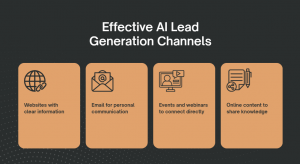
Relying exclusively on email and LinkedIn ignores channel limitations during peak saturation. Digital channels alone struggle achieving adequate penetration when competing against mass volume. Organizations employing human-led phone conversations achieve contact rates and conversation quality substantially exceeding digital-only competitors. The combination approach proves more efficient than single-channel strategies.
Pitfall Three: Sales-Marketing Misalignment
Marketing delivering contacts lacking sales readiness wastes both functions. Conversely, sales rejecting insufficiently qualified leads frustrates marketing efforts. Explicit qualification criteria, lead scoring agreements, and regular communication between functions prevent friction. Organizations maintaining sales-marketing alignment consistently achieve higher conversion rates than those operating in isolation.
Pitfall Four: Volume Over Precision
Pursuing maximum prospect count damages conversion metrics and relationship quality. Targeted, selective prospecting beats broad, generic campaigns. Focus on ideal customer profiles and qualified account lists rather than maximum volume. Quality metrics typically outweigh activity metrics in predicting ultimate success.
Building 2026 Success: The 2025 Q4 Foundation
Q4 importance extends beyond immediate revenue impact. Well-executed Q4 campaigns establish foundations for accelerated 2026 performance. Organizations locking in January meetings begin the year with warm relationships and qualified opportunities while competitors start from cold outreach. Database improvements directly enhance Q1 campaign efficiency. Strategic momentum carries forward, allowing 2026 sales teams to focus on advancement rather than prospecting.
The organizations succeeding in 2026 aren’t those scrambling through January. They’re those who execute Q4 strategically—planting seeds in September, developing relationships through November, securing commitments in early December, and entering January with calendars full of high-quality conversations.
Conclusion: Mastering the Make-or-Break Quarter
Quarter four remains the defining period for most B2B organizations. The combination of buyer urgency, compressed timelines, elevated competition, and decision-maker pressure creates an environment fundamentally different from other seasons.
Organizations recognizing these dynamics and adapting their engagement strategies accordingly achieve disproportionate results. The approach differs from generic best practices: earlier launch windows, quality-focused targeting, multichannel orchestration, and strategic balance between urgency and relationship integrity prove more effective than volume-driven alternatives.
The global B2B lead generation market’s $11.23 billion valuation reflects the substantial stakes and investment organizations commit to effective execution. Yet not all investments yield equal returns. Organizations combining strategic clarity, precise execution, and authentic prospect engagement achieve measurable success.
For ambitious organizations committed to Q4 success—and the momentum carrying into 2026—the time to begin is now. Early launches, quality focus, multichannel sophistication, and strategic execution transform year-end pressure into measurable competitive advantage.
| Key Metric | Impact Relevance |
| Early Campaign | Enables relationship development before peak competition |
| Multichannel Engagement | Increases contact rates and breakthrough penetration vs. single channels |
| Quality-Focused Targeting | Significantly improves conversion rates and deal value |
| January Pre-Booking | Establishes momentum bridge and reduces Q1 new prospect acquisition |

Sonja Pischedda
CXPORTAL is your award-winning AI, ML, SAP Commerce Cloud and eCommerce digital transformation solutions provider, CXPORTAL is specialised in Innovating business strategy, design and development of digital products, digital platforms engineering and data science solutions. CXPORTAL Leverage Artificial Intelligence, Machine Learning Algorithms, Deep Learning Models, and big data Analytics to unlock and scale your business data, and optimising the operating model for exponential business impact.