
Executive Summary
The distinction between leads and prospects represents one of the most fundamental—yet frequently overlooked—concepts in sales management. While both terms refer to potential revenue opportunities, they occupy fundamentally different positions within the sales funnel and require distinctly different engagement strategies. This white paper explores the critical differences between these two concepts, examines why this distinction matters for organizational performance, and provides actionable frameworks for effectively managing the transition from lead to prospect.
Organizations that master this distinction consistently achieve higher conversion rates, more efficient resource allocation, and more accurate revenue forecasting. Conversely, sales teams that conflate these categories often waste significant effort pursuing unqualified opportunities while overlooking high-probability deals.
Introduction
Across sales organizations worldwide, a recurring problem undermines pipeline efficiency and team performance: the misalignment between how different stakeholders define and classify potential customers. Specifically, the terms ‘lead’ and ‘prospect’ are frequently used interchangeably, despite representing distinctly different stages of buyer readiness and engagement.
This terminology confusion creates measurable business consequences. Sales representatives may invest disproportionate effort into unqualified opportunities. Marketing teams may struggle to provide the right volume and quality of contacts to sales. Revenue forecasting becomes unreliable when the pipeline contains ambiguous or misclassified records. Pipeline visibility suffers when different team members interpret the same contact differently.
The solution begins with establishing a shared, precise understanding of what distinguishes a lead from a prospect. This clarity cascades throughout the organization—enabling better prioritization, more targeted outreach, cleaner data, and ultimately, improved sales results.
Understanding Leads: The Starting Point Definition and Characteristics
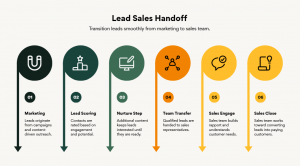
A lead is an unqualified contact who has demonstrated preliminary interest in your organization’s offerings. This individual or organization has entered your awareness through some action—completing a form, clicking a link, engaging with content—but remains largely unknown and unvetted.
The critical characteristic of a lead is the absence of qualification. At this stage, you lack essential information and confirmation regarding several key factors:
- Fit alignment: Whether your solution genuinely addresses their business challenges or requirements
- Financial capacity: Whether they possess the budget to engage with your offerings
- Legitimacy: Whether the contact represents a genuine business opportunity or represents a competitor, scam, or time-waster
- Authority and urgency: Whether they hold decision-making power and face genuine time pressures to solve their problems
Despite these unknowns, leads represent genuine potential. They have taken an action indicating at least minimal interest. Your role at this stage involves investigation and nurturing, not immediate sales pressure.
Common Sources of Leads
Leads emerge through diverse channels, each requiring different nurturing approaches:
- Digital engagement: Web form submissions, downloadable resources, newsletter subscriptions, and webinar registrations
- Referrals: Recommendations from existing customers, business partners, or professional networks
- Outbound research: Prospects identified through targeted research, cold outreach campaigns, or social media engagement
- Events and networking: Trade show attendees, conference participants, and professional organization members.
Understanding Prospects: Qualified Opportunities – Definition and Characteristics
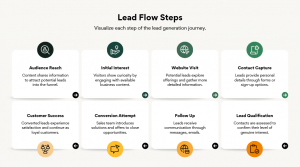
A prospect is a qualified lead—a contact or organization that has been systematically evaluated and confirmed to meet your predefined qualification criteria. The transition from lead to prospect reflects the completion of rigorous assessment processes that confirm genuine sales potential.
Prospects demonstrate several distinguishing characteristics that differentiate them from the broader lead population:
- Demonstrated alignment: Their business profile, challenges, and requirements align with your ideal customer profile
- Specific and active interest: They have engaged substantively with your organization and expressed genuine interest in your solutions
- Complete qualification: You have verified their budget availability, decision-making authority, and organizational need
- Engagement momentum: Two-way conversations have begun, with prospects actively exploring your solutions
The Qualification Journey
A fundamental principle underlies the lead-to-prospect transition: every prospect begins as a lead, but not every lead evolves into a prospect. The conversion process depends on systematic qualification that determines whether the initial interest translates into genuine buying potential.
This transformation reflects careful investigation and assessment. Prospects represent the segment of your lead population that truly warrants investment of your sales team’s time and resources.
Key Differences: A Comparative Framework
The following table illustrates the key dimensions along which leads and prospects differ:
| Dimension | Lead | Prospect |
| Funnel Position | Top of funnel; early stage | Mid-funnel; engagement stage |
| Information Level | Basic contact details only | Comprehensive business context |
| Qualification Status | Unqualified; unverified | Qualified; verified fit |
| Engagement Level | Passive; low intent | Active; clear intent |
| Primary Strategy | Nurture and educate | Customize and close |
Converting Leads into Prospects
The systematic process of lead qualification determines which contacts advance to prospect status. Organizations that implement disciplined qualification processes see dramatic improvements in sales efficiency and results. This section outlines proven methodologies for managing this critical transition.
Lead Scoring Systems
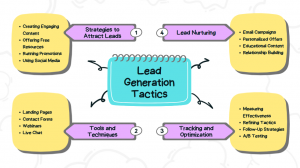
Lead scoring assigns numerical values to contacts based on behavioral and demographic indicators. Contacts exceeding your qualification threshold progress to prospect status. Effective scoring systems consider factors such as:
- Engagement frequency and depth, company size and industry alignment, role seniority and decision-making authority, and explicit indicators of buying intent.
- Lead scoring provides quantitative objectivity to qualification decisions, reducing arbitrary judgments and ensuring consistent standards across your sales team.
Discovery Conversations
- Strategic conversations—whether through calls or email exchanges—allow you to gather essential information about leads while simultaneously assessing their receptivity to your solutions.
- Effective discovery conversations explore their current business challenges, their decision-making timeline, their budget parameters, and their organizational priorities.
- These conversations serve dual purposes: they qualify the lead while simultaneously beginning to establish relationship rapport and demonstrate your organization’s value proposition.
Systematic Research and Verification
- Background research on prospects’ companies, industries, and roles informs your qualification assessment. Modern data platforms enable rapid verification of key qualification factors.
- Research helps you confirm that the opportunity aligns with your target market, understand the prospect’s operating environment, and identify potential pain points your solutions address.
- Investment in research during the qualification phase yields significant dividends in improved sales conversations and higher conversion rates later.
Business Impact: Why This Distinction Matters
- Many sales organizations acknowledge the conceptual difference between leads and prospects but underestimate the practical impact of this distinction. In reality, clear differentiation between these categories drives significant organizational benefits.
Enhanced Prioritization and Time Allocation
- Sales representatives face constant resource constraints. Clear qualification ensures they invest their time in the highest-probability opportunities. Rather than distributing effort equally across all contacts, teams can concentrate on prospects with confirmed buying potential.
- This focused approach simultaneously reduces time wasted on unqualified opportunities and increases focus on deals likely to close.
- Organizations implementing rigorous lead-prospect distinction report representatives spending 40-50% more of their time on actual selling activities with qualified opportunities.
Precision in Messaging and Positioning
- Leads and prospects require fundamentally different communication approaches. Leads benefit from educational, awareness-building content that helps them understand their challenges and possible solutions.
- Prospects, having already decided that engaging with your organization makes sense, respond better to tailored, ROI-focused discussions about how your specific solutions address their confirmed needs.
- Aligning messaging precision to qualification status increases engagement rates and conversion velocity.
- Prospects receive compelling reasons to move forward; leads receive the information they need to move into prospect status.
- Marketing teams also benefit from this distinction, enabling them to segment communications, measure pipeline contribution more accurately, and demonstrate the business impact of their lead generation activities.
Pipeline Clarity and Revenue Forecasting
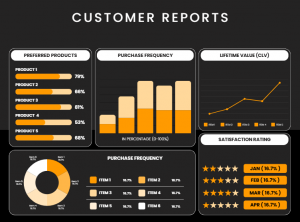
Sales forecasting reliability depends on accurate pipeline classification. When leads and prospects are conflated, pipeline visibility becomes compromised. Prospects occupy a significantly different position in the conversion journey and therefore carry different probability assumptions. Clear separation enables more accurate forecasting, supports better resource allocation, and gives leadership realistic expectations for near-term and long-term revenue.
Organizations with tight lead-prospect separation report forecast accuracy improvements of 20-30% compared to peers lacking such discipline.
Practical Examples: Lead vs. Prospect in Action
- Understanding the conceptual differences between leads and prospects becomes more tangible through real-world examples.
- The following scenarios illustrate how the distinction manifests in practice:
Scenario One: The Content Downloader
Situation: An individual downloads a free industry report from your website, providing their name and email address.
Classification: Lead
Analysis: While they’ve demonstrated interest, you lack essential information. You don’t know their role, company size, industry, budget availability, or actual need for your solutions. They may be a student, a competitor conducting research, or someone exploring options without genuine purchasing intent. Your response should focus on education and relationship building, not sales pressure.
Scenario Two: The Qualified Progression
Situation: The same downloader responds to your follow-up email. They share that they manage marketing operations at a mid-sized financial services company. They identify a specific challenge your solutions address. They confirm their budget and timeline for addressing this challenge.
Classification: Prospect
Analysis: The conversion occurred through your discovery conversations. You’ve confirmed fit, need, and budget. You’ve identified a specific decision-maker and timeline. You now possess the information necessary to position your solution in terms of their specific situation. Your engagement strategy should shift to customized demonstrations, ROI discussions, and sales cycle progression.
Scenario Three: The Trade Show Encounter
Situation: You meet someone at an industry trade show, they express interest in your solutions, and you exchange business cards.
Classification: Lead
Analysis: The conversation confirmed some interest but leaves many questions unanswered. While you have a business card with contact information, you lack confirmation of whether they actually need your solutions, whether they have authority to make purchasing decisions, or what timeline they’re operating under. Your follow-up should include information about your organization and request a call to explore fit more thoroughly.
Conclusion
The distinction between leads and prospects represents far more than semantic differentiation. It reflects a fundamental difference in where contacts stand in their journey toward purchasing, how much you know about their fit with your solutions, and therefore how you should engage with them. Organizations that embrace this distinction—implementing clear definitions, systematic qualification processes, and differentiated engagement strategies—consistently outperform peers who treat all early-stage contacts interchangeably.
Clear lead-prospect separation enables more efficient time allocation, more relevant messaging, cleaner pipeline management, and more accurate forecasting. The cumulative effect of these improvements is substantial: improved sales productivity, higher conversion rates, and more predictable revenue outcomes.
Implementing these concepts requires modest investment: developing clear qualification criteria, training your sales team on proper classification, and potentially implementing scoring systems or CRM configurations to automate and enforce proper categorization. The return on this investment typically manifests quickly, with organizations seeing meaningful improvements in sales efficiency within 60-90 days of implementation.
The sales teams that win in today’s competitive environment distinguish themselves through discipline, precision, and focus. Mastering the lead-prospect distinction represents a foundational step toward building these competitive advantages into your organization.

Sonja Pischedda
CXPORTAL is your award-winning AI, ML, SAP Commerce Cloud and eCommerce digital transformation solutions provider, CXPORTAL is specialised in Innovating business strategy, design and development of digital products, digital platforms engineering and data science solutions. CXPORTAL Leverage Artificial Intelligence, Machine Learning Algorithms, Deep Learning Models, and big data Analytics to unlock and scale your business data, and optimising the operating model for exponential business impact.